

Introduction: The Post-Dye Dilemma - Between Beautiful Color and Dry Hair
The story begins with a feeling of joy and renewal; a new, vibrant hair color that reflects a radiant look and self-confidence. But as days and weeks pass, the unsettling truth may gradually emerge: the hair that was shiny and lively is now dull, dry to the touch, and prone to breakage. With the arrival of discount seasons such as the Black Friday discount season, everyone rushes to buy beauty supplies, including hair dyes and related accessories.
This experience, familiar to many, turns the initial joy of a new color into constant anxiety about the hair's health and appearance. This is further complicated in the Gulf region, where harsh sunlight, high humidity, and desalinated water pose unique challenges to the health of colored hair.
But this damage is not a final verdict. Through a precise scientific understanding of what happens inside the hair shaft during the dyeing process, and by adopting an integrated, multi-faceted care strategy, it is entirely possible not only to halt the hair's deterioration but to reverse the damage and restore its vitality, moisture, and shine, all while maintaining the carefully chosen color's beauty.
This comprehensive report is a detailed roadmap for reviving dyed hair. We will embark on a journey starting from the anatomy of chemical damage at a molecular level, through the emergency care protocol in the critical first hours after dyeing, to building a complete arsenal of treatment solutions. This arsenal will cover everything: from home care routines, effective natural remedies, and recommended commercial products, to advanced salon treatments, and finally, the role of internal nutrition in building healthy hair from the roots.
Chapter 1: The Chemical Anatomy of Damage - Why Does Hair Dye Cause Dryness?
To understand how to treat the damage, one must first understand the nature of the battle the hair is fighting. The process of dyeing hair, especially with permanent colors, is not just an external coating; it is a harsh chemical process that fundamentally changes the hair's structure.
The Hair Under a Microscope: A Natural Defensive Structure
Before diving into the details of the damage, it's essential to know the components of a healthy hair shaft. Each hair consists of three main layers:
- The Cuticle: The protective outer layer, composed of overlapping scales like roof tiles. This layer is the hair's first line of defense, its primary job being to lock in moisture and proteins and protect it from external factors.
- The Cortex: The heart and strength center of the hair, containing keratin proteins that give hair its elasticity and strength, and melanin pigment molecules that determine its natural color.
- The Medulla: The soft, central core, not present in all hair types.
In its natural state, hair is moisturized by sebum, a natural oil secreted by the scalp. A healthy, compact cuticle acts as a tight seal, preserving this natural moisture inside the hair shaft.
The Dual Chemical Assault of Permanent Dye
For the new color to permanently settle inside the hair, the dye molecules must penetrate the protective outer layer and reach the inner cortex. This is done through a two-pronged chemical attack:
1. The Alkaline Agent (Ammonia): Breaching the Outer Gate
To open the way for color molecules, the outer cuticle scales must be lifted. This is the role of the alkaline agent, most famously Ammonia. Ammonia significantly raises the hair's $pH$, forcing these scales to swell and open involuntarily. This step itself is structural damage, compromising the hair's primary defensive layer.
Worse, even after the dyeing process is complete, these scales often fail to return to their completely flat, compact state, leaving the hair surface permanently rough, porous, and losing moisture very easily. This is the direct cause of the dryness and frizz that appears after dyeing.
It is important here to debunk a common myth about "Ammonia-Free" dyes. Many believe these products are completely safe, but this is inaccurate. For a dye to be permanent, an alkaline agent *must* be used to open the hair cuticle. Ammonia-free dyes simply replace it with another substance, often Ethanolamine (or MEA). Although MEA has a less pungent odor, it has its own drawbacks; it is a larger molecule than ammonia, making it harder to rinse completely from the hair. Its residue can remain on the hair and scalp, causing gradual and continuous damage and irritation even after the dyeing process.
2. The Oxidizing Agent (Hydrogen Peroxide): Internal Demolition
Once ammonia (or its substitute) opens the way, Hydrogen Peroxide, also known as "developer," enters the inner cortex to perform two tasks. First, it breaks down and bleaches the natural melanin pigment to make room for the new color. Second, it chemically reacts with the artificial color molecules to enlarge them and lock them inside the hair shaft.
This oxidative process is extremely harsh. It not only removes natural pigment but also attacks and dissolves the structural keratin proteins that make up the hair's structure, and weakens the internal disulfide bonds that give hair its strength and elasticity.
The Aftermath: A Perfect Storm of Dryness
After the dyeing process, the hair finds itself in a state of extreme weakness, perfectly primed for dryness and damage:
- Damaged Cuticle: The open and damaged scales can no longer lock in moisture, leading to chronic dryness.
- Protein Loss: Keratin degradation makes the hair weaker, more brittle, prone to breakage, and less able to retain water.
- pH Imbalance: The high alkalinity of the dye disrupts the natural acidic balance of the hair and scalp, further stressing the outer cuticle.
- Cumulative Effect: This damage accumulates with every coloring session.
Chapter 2: The Golden 72 Hours - Emergency Protocol for Newly Colored Hair

The first three days after leaving the salon are the most sensitive and critical period in your colored hair's life. What you do, or don't do, during this window can set the course for your hair and color's health for weeks to come.
The Cardinal Rule: Delay the Wash
The most important rule of all is to wait at least 48 to 72 hours before the first wash. The scientific reason is that the hair cuticle is still in "shock" and not fully closed, and the new color molecules are still settling. Washing too early allows these unstable molecules to rinse out, causing rapid color fading.
The First Wash Ritual: Precision Matters
When it's time for the first wash, it must be done with a precise ritual:
- Water Temperature: Completely avoid hot water. Use lukewarm or warm water, and then finish with the coldest rinse you can tolerate. This cold rinse helps seal the cuticle shut.
- Product Choice: From the very first wash, it is essential to use a Sulfate-Free Shampoo and a conditioner specifically for colored hair. This is not optional; it's a necessity.
Immediate Care: Gentle Touches
Hair in this stage is at its weakest and most fragile.
- Avoid Heat: Refrain from using heat styling tools for at least a week. If a blow-dryer is necessary, use the lowest heat setting and always apply a heat protectant spray. (We recommend visiting Cosmolife to discover the best protective sprays).
- Sun Protection: In the Gulf region, it's vital to protect newly colored hair from direct sunlight.
- Gentle Handling: Detangle gently with a wide-tooth comb and avoid vigorous towel-rubbing.
"The porosity paradox is the biggest challenge. Damaged hair absorbs moisture fast, but loses it just as quickly. The secret is to apply a deep conditioning mask on that first wash, then immediately lock in that moisture with a cold water rinse." - Cosmolife Beauty Expert.
Chapter 3: The Complete Care Arsenal - A Guide to Products and Ingredients
After the critical initial period, the long-term care phase begins, aimed at continuous repair and permanent protection. This requires building an integrated arsenal of products and, more importantly, understanding the ingredients that make them effective or harmful.
Decoding the Label: Your Guide to Good and Bad Ingredients
The ability to read an ingredient label is the most powerful tool you can possess. The following table is your quick reference guide.
| Category | Ingredients to Look For (Friendly) | Ingredients to Avoid (Harmful) | The Science |
|---|---|---|---|
| Cleansers (Surfactants) | Cocamidopropyl Betaine, Sodium Cocoyl Isethionate, Decyl Glucoside | Sulfates: Sodium Lauryl Sulfate (SLS), Sodium Laureth Sulfate (SLES) | Sulfates are harsh detergents that strip hair of its natural oils and color, causing severe dryness. |
| Moisturizers (Humectants & Emollients) | Glycerin, Hyaluronic Acid, Panthenol (Pro-Vitamin B5), Oils (Argan, Jojoba), Shea Butter, Cetyl Alcohol | Drying Alcohols: Alcohol Denat, SD Alcohol, Isopropyl Alcohol | Drying alcohols evaporate quickly, pulling moisture from the hair and causing immediate frizz. |
| Strengtheners & Repairers | Hydrolyzed Proteins (Keratin, Wheat, Silk), Amino Acids, Ceramides | Non-Water-Soluble Silicones: Dimethicone, Amodimethicone | Hydrolyzed proteins patch gaps. Heavy silicones build up, blocking moisture. |
| Preservatives | Phenoxyethanol, Natural Extracts | Parabens: Methylparaben, Propylparaben. Formaldehyde-Releasers: DMDM Hydantoin | Linked to scalp irritation, dryness, and potential health concerns. |
Building Your Care Routine: The 4 Core Products
- Gentle Cleanser (Shampoo): Sulfate-free, 2-3 times a week.
- Daily Moisturizer (Conditioner): Essential after every wash to detangle and smooth the cuticle.
- Intensive Weekly Treatment (Mask): The cornerstone of repair. Leave on for 20-30 minutes.
- Protective Finisher (Serum/Oil): To seal the cuticle, protect from environmental damage, and add shine.
Product Recommendations
As experts at [Cosmolife], we recommend some products that have proven effective for our clients:
Revlon Hydra Rescue Shampoo: Rescues Your Hair from Dryness!
Revlon Hydra Rescue Shampoo is designed as an urgent hydration boost for dry, thirsty hair. Its formula is sulfate-free, gentle on color, and works to cleanse while providing long-lasting moisture.
- Benefits: Intense hydration, shine enhancement, strengthens hair fibers, and protects from damage.
- How to Use: Apply to wet hair, massage gently, and rinse thoroughly with lukewarm water.
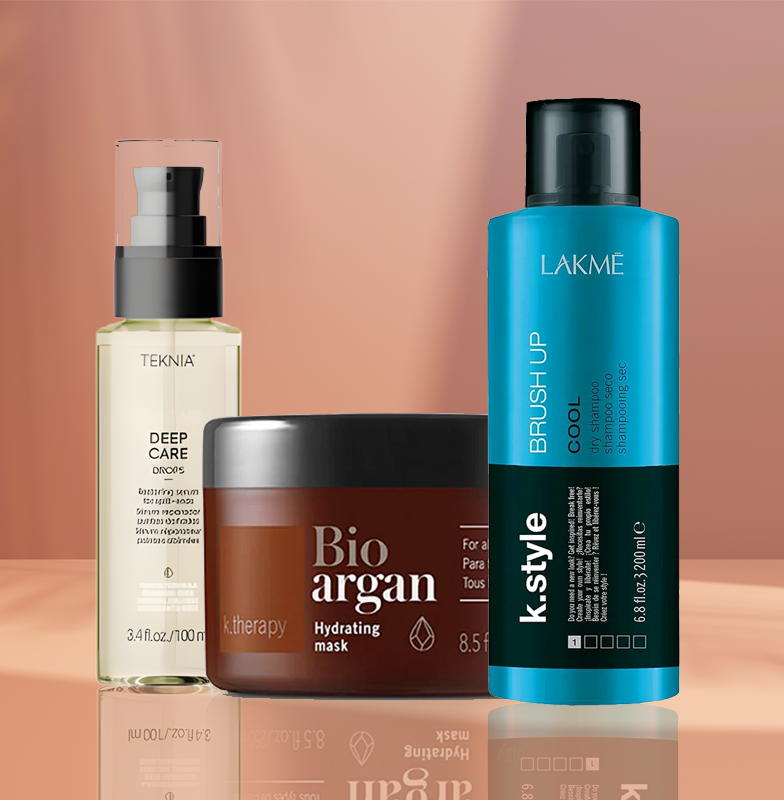
Your Hair's Rendevous with Luxury: Lakmé K-Therapy Bio-Argan Mask
This mask combines the power of bio-argan oil with Lakmé's K-Therapy technology. It's the perfect solution for deep hydration and repairing damaged hair from the inside.
- Benefits: Deep hydration, repair and strengthening, vibrant shine, and heat protection.
- How to Use: Apply to damp hair after shampooing. Leave for 10-15 minutes for intensive moisturizing, then rinse. Use once or twice a week.
Lakmé Teknia Deep Care Serum: The All-in-One Solution for Damaged Hair
This serum is an intensive treatment that works to repair the hair's internal structure. Its formula contains a Pro-Keratin complex and forms a protective shield that protects hair up to 230°C.
- Benefits: Intensive repair, effective heat protection, instant smoothing, and healthy shine.
- How to Use: Distribute a small amount on mid-lengths and ends (damp or dry). Do not rinse.
Does your hair feel like it needs this intensive care?
As experts at [Cosmolife](https://cosmolifekw.com/en), we only recommend the best. We've carefully selected these products because we believe in their power to make a real difference. Your colored hair deserves the best to restore its vitality and shine.
Browse our full collection of colored hair care solutions at the Cosmolife store and let your hair shine with health and beauty.
The Balancing Act: Protein vs. Moisture
A common mistake is overloading damaged hair with protein treatments, which leads to the opposite result: stiff, hard, and brittle hair. Damaged hair needs a delicate balance between Protein (for strength) and Moisture (for elasticity). Alternate between mask types: a protein mask for repair weekly, and a moisture mask (oils, butters) twice a week.
Chapter 4: Nature's Pharmacy and Gulf Traditions

Natural ingredients offer powerful and effective solutions for hair repair, based on their rich chemical composition.
The Power of Natural Oils: A Deep Dive into Hydration
- Coconut Oil: Unique in its ability to penetrate the hair shaft thanks to its lauric acid content, reducing protein loss.
- Olive Oil: Rich in fatty acids, excellent for softening hair and restoring elasticity.
- Argan Oil: "Liquid gold," light and rich in Vitamin E, perfect for taming frizz and adding shine without a greasy feel.
How to Use (Hot Oil Treatment): Gently warm the oil, apply generously to hair and scalp, cover with a warm towel for 30 minutes, then shampoo well.
DIY Mask Recipes (with Detailed Instructions)
1. The Ultimate Repair Mask (Protein + Fats)
- Ingredients: 1 ripe avocado, 1 egg, 1 tablespoon olive oil, 1 tablespoon honey.
- The Science: Avocado and oil for fats, egg for protein, honey as a humectant.
- Method: Mash and mix all ingredients. Apply to damp hair for 30-45 minutes, then rinse well with cool water before shampooing.
2. The Deep Hydration Mask (Moisture Bomb)
- Ingredients: 2 tablespoons full-fat yogurt, 1 tablespoon honey, 1 tablespoon pure aloe vera gel.
- The Science: Yogurt for fats and lactic acid, honey and aloe for attracting moisture.
- Method: Mix ingredients, apply to hair for 30 minutes, then rinse.
Chapter 5: Calling in the Experts - Explaining Advanced Salon Treatments
When the damage is severe, home treatments may not be enough. This is where professional salon treatments come in, offering concentrated and powerful solutions.
The Surface Repair Team: Protein and Keratin Treatments
What they are: Treatments designed to coat the hair shaft with hydrolyzed proteins (like keratin) to temporarily fill gaps and cracks in the damaged cuticle.
How they work: Think of it as "wall putty" for a cracked wall. They smooth the surface, reduce frizz, and add a layer of strength. Their effect is primarily external and cosmetic, and it gradually washes out.
When you need them: Best for hair suffering from high porosity, frizz, and a rough texture.
(For more on professional hair treatments, read our detailed article here).
Chapter 6: Beauty from Within & Gulf Environmental Challenges
No external product can compensate for a lack of internal nutrition. Healthy hair starts from within.
The Basic Building Blocks of Hair
- Protein is Key: Eggs, chicken, fish, legumes.
- The Role of Healthy Fats: Omega-3 fatty acids from fatty fish (salmon), flaxseeds, and walnuts.
Vital Vitamins and Minerals for Hair Health
- Iron and Zinc: From red meat, spinach, and lentils.
- Vitamin C: From berries and citrus fruits.
- B Vitamins (especially Biotin): To strengthen hair and promote growth.
- Vitamin E: From nuts and seeds.
Gulf Environmental Challenges: Sun and Desalinated Water
Desalinated Water: Often has a higher content of minerals and chlorine, which can strip hair. Solution: Install a shower filter and use a clarifying shampoo once every two weeks to remove buildup.
Sun Protection: Strong UV rays break down the chemical bonds of the color. Solution: Wear a hat or scarf, and use products containing UV filters.
Hydration: Drink at least 2 liters of water daily to support hair health from the inside.
Frequently Asked Questions About Colored Hair Care
Why does my hair get so dry after dyeing?
Permanent hair dyes use chemicals (like ammonia and hydrogen peroxide) to open the hair cuticle and change its color. This process strips natural moisture and damages the protein structure, leaving hair porous, dry, and brittle.
How often should I wash my colored hair?
It is recommended to reduce hair washing to two or three times a week. This helps maintain natural protective oils and reduces color fading. Always use a sulfate-free shampoo.
Can I use natural oils on colored hair?
Yes, oils like argan oil, coconut oil, and olive oil are excellent for moisturizing colored hair. They can be used as a weekly hot oil treatment or as a light serum on the ends to tame frizz and add shine.
What's the difference between a protein mask and a moisture mask?
A protein mask (like keratin) works to repair the damaged structure and strengthen the hair. A moisture mask (rich in oils and butters) restores hydration and elasticity. Dyed hair needs a balance of both.
How do I keep my hair color from fading?
Avoid washing with hot water, use a shampoo and conditioner specifically for colored hair (sulfate-free), minimize the use of heat styling tools, and protect your hair from the sun with products containing UV filters.
Are "Ammonia-Free" products completely safe and non-drying?
They are "gentler," but not damage-free. They replace ammonia with another alkaline agent (like MEA) to open the hair cuticle, a necessary step for permanent color. Therefore, the hair still requires intensive care and repair even with these dyes.
Conclusion: Your Plan for Healthy, Vibrant Colored Hair
Restoring hair health after dyeing isn't magic; it's the result of understanding and commitment. The takeaway is simple: the damage is chemical, the solution must be strategic and multi-layered, and consistency is the key to success.
Sample Weekly Care Schedule
- Day 1 (Wash Day 1): Gentle shampoo + Intensive protein mask + Conditioner + Protective serum.
- Day 2 & 3: Refresh ends with a light oil. Use dry shampoo (like Lakmé Brush Up Cool Dry Shampoo) if needed.
- Day 4 (Wash Day 2): Gentle shampoo + Deep moisture mask (oils/butters) + Conditioner + Serum.
- Day 5 & 6: Refresh ends as needed.
- Once a Month: Use a Clarifying Shampoo to remove mineral and product buildup.
Lakmé Brush Up Cool Dry Shampoo: The Instant Savior
To reduce washing frequency, dry shampoo is an excellent solution. Lakmé Brush Up Cool Dry Shampoo is designed to instantly absorb excess oils, giving hair a clean, fresh look and adding volume to the roots.
A Final Word from the Experts at [Cosmolife]
At [Cosmolife], we believe that beautiful hair is healthy hair first. Adopting these practices doesn't mean giving up the fun of changing your hair color; it empowers you to enjoy the color you love while maintaining your hair's strength and shine.
Are you ready to start your hair repair journey? A single visit to our store could be the first step toward restoring your confidence in your hair's beauty.
Discover the best treatment products, carefully selected by our experts, at the Cosmolife store


