

Introduction: Your Baby's Skin, a World of Delicacy and Sensitivity
We at CosmoLife understand that this journey is full of precious moments, as well as questions and challenges. Among these challenges is the task of caring for your newborn's skin, which is the first line of defense for their health. This delicate skin is not just a beautiful covering, but a complex and fragile system that requires deep understanding and thoughtful care.
Your baby's skin is fundamentally different from yours. It is up to 30% thinner, with an immature Stratum Corneum. The bonds between its cells are weaker, making its protective barrier less efficient at preventing moisture loss and repelling external irritants. Additionally, the Acid Mantle that maintains skin balance and defends against microbes has not yet fully formed. This unique physiological structure is what makes their skin extremely sensitive and prone to dryness, irritation, and inflammation, turning the diaper area into a field of daily challenges.

Decoding Diaper Rash: From Simple Redness to Serious Complications
Diaper rash is medically known as "Diaper Dermatitis," and it is the most common skin problem in infants, affecting up to 35% of children in the diapering age. It may seem like just a passing redness, but understanding its biological and chemical causes and the risks of neglecting it is your first step toward effective prevention and wise treatment.
The Pathophysiology: What Exactly Happens Under the Diaper?
The root cause is not the diaper itself, but the enclosed, moist environment it creates. It's a perfect storm of interconnected factors:

- Excess Moisture and Prolonged Contact: Continuous exposure to urine leads to overhydration of the skin's stratum corneum. This constant softening breaks down the bonds between keratinocytes, significantly weakening the skin's protective barrier and making it more permeable to irritating chemicals and enzymes.
- Mechanical Friction: The constant rubbing of the diaper against the thin, moistened skin causes direct mechanical damage, creating an entry point for irritants.
- Chemical and Enzymatic Attack: This is the critical point. The greatest danger comes not from urine or feces alone, but from their interaction. Bacteria in the feces break down urea in the urine, producing ammonia gas. This ammonia raises the skin's pH from its normal acidic level (around 5.5) to an alkaline level. In this alkaline environment, potent digestive enzymes found in feces, primarily Protease and Lipase, become active. These enzymes begin to attack and break down the essential proteins and lipids that form the skin's barrier structure, leading to its erosion, inflammation, and the appearance of that painful redness.
"Prevention is always key. A thick layer of a barrier cream containing zinc oxide is like putting a protective shield on your baby's skin." - Experts from the American Academy of Pediatrics.
Classifying Diaper Rash: Not All Redness is the Same
It is important to distinguish between types of diaper rash to choose the right treatment:
- Irritant Diaper Dermatitis: This is the most common type, appearing as a shiny red rash on the most prominent areas in contact with the diaper, such as the buttocks, inner thighs, and genitals, usually sparing the deep skin folds.
- Candidal Diaper Dermatitis: A secondary fungal infection that occurs when the fungus Candida albicans penetrates the broken skin. It is characterized by a "beefy" red rash with small pustules and separate red satellite lesions at the edges of the inflamed area. It often extends into the skin folds and requires treatment with a prescription antifungal.
- Seborrheic Dermatitis: Appears as a greasy, scaly, light red rash that may extend to other areas like the scalp (cradle cap), armpits, and behind the ears.
Risks of Neglect or Using the Wrong Products:
- Chronic Pain and Infant Discomfort: What starts as mild redness can quickly develop into painful sores that make your baby cry constantly, especially during diaper changes or urination and defecation.
- Secondary Bacterial Infection: Cracked and eroded skin is an open gateway for bacteria like Staphylococcus and Streptococcus, which can lead to boils or cellulitis, serious conditions requiring urgent medical intervention.
- Danger of Inappropriate Products: Using adult creams, wipes containing alcohol and strong fragrances, or talcum powder (which is advised against due to inhalation risk) can worsen the situation, causing hypersensitivity or prolonging the inflammation.

The Golden Protocol for Care and Prevention: The Scientifically-Backed ABCDE Strategy
Prevention is the cornerstone of managing diaper rash. The best evidence-based practices can be summarized in the ABCDE strategy, recommended by pediatricians worldwide:
- A - Air: Allow your baby to have regular periods of time each day (10-15 minutes, 3-4 times) without a diaper on a clean, sterile towel. Air exposure speeds up drying, reduces moisture, and promotes the skin's natural healing process.
- B - Barrier: This is the most effective step in the prevention plan. Apply a thick, visible layer (like an insulating layer) of a high-quality barrier cream with every diaper change. This cream acts as a physical shield between your baby's skin and irritants (moisture, urine, feces). Common active ingredients include Zinc Oxide and Petrolatum.
- C - Cleansing: Proper cleaning reduces friction and removes irritants. Use lukewarm water and a soft cotton cloth. For bowel movements, alcohol-free and fragrance-free wipes can be used. The crucial point is to pat dry gently with a soft towel and completely avoid rubbing the skin.
- D - Diaper: Choose high-absorbency diapers with "moisture-lock" capabilities. Change the diaper at least every 2-3 hours, and immediately after a bowel movement. Ensure the diaper size is appropriate; a tight diaper increases friction, while a very loose one can cause leaks.
- E - Education: Your knowledge of your baby's skin physiology, the causes of problems, and the correct care steps is your most powerful weapon on this journey. Be proactive in prevention rather than waiting for treatment.
Looking for solutions to care for your baby's skin?
Browse Our Baby Care Section NowYour Scientific Guide to Choosing the Right Product
At CosmoLife, we don't just display products; we offer solutions based on scientific understanding and trusted quality. Here is your detailed guide on how and when to use each product:
For Daily Protection and Continuous Prevention:

Avalon Diaper Rash Cream: This cream is the ideal choice for your daily routine. With its balanced formula rich in Panthenol (Provitamin B5), which promotes skin healing and hydration, and natural Chamomile extract with its soothing and anti-inflammatory properties, Avalon forms a light protective layer that maintains skin softness and prevents minor irritation with every diaper change.
For Comprehensive Prevention and Treatment at the First Sign of Redness (Moderate Grade):

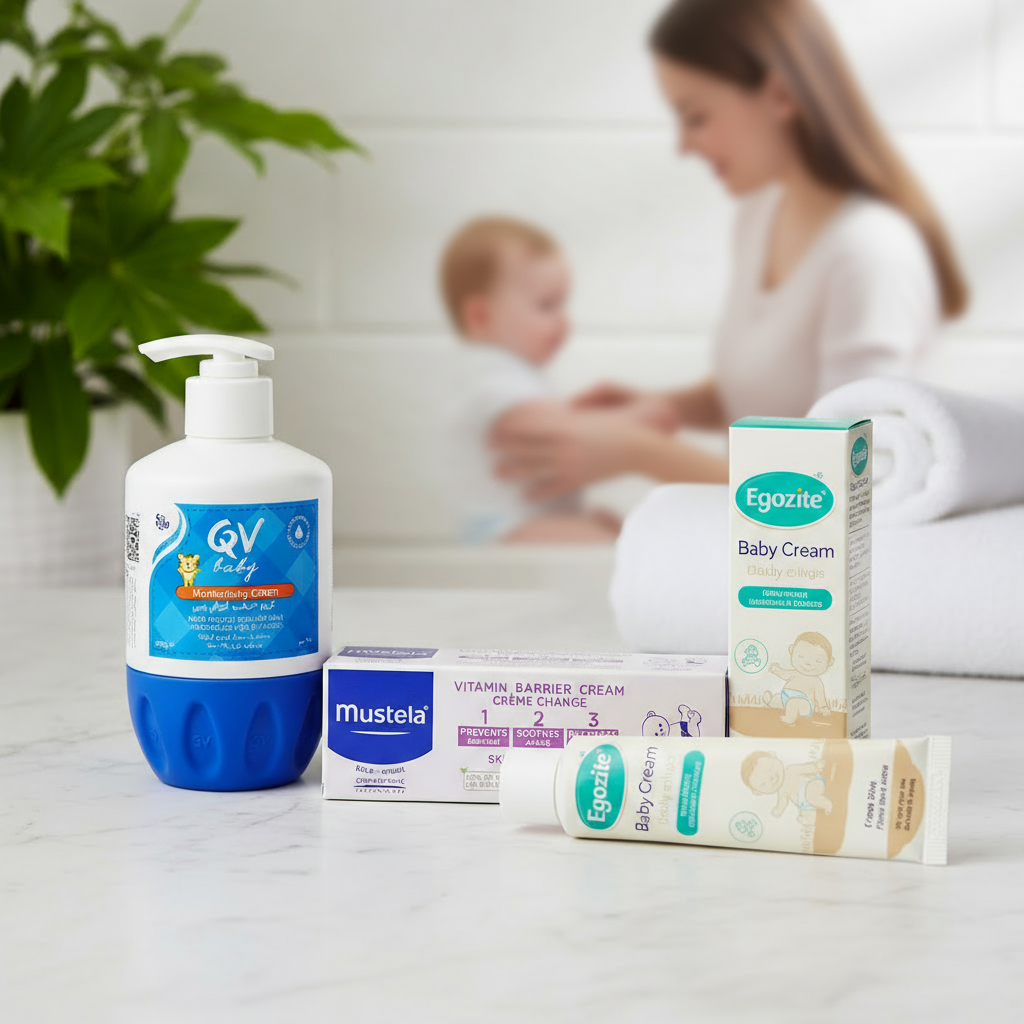
Mustela Vitamin Barrier Cream 123: This product is an innovative and complete solution. It works on three main axes supported by a 99% natural formula:
- Prevents: Thanks to a special wax blend, it forms an effective protective barrier against moisture and irritants.
- Soothes: From the first use, it works to soothe discomfort and redness thanks to avocado and chamomile extracts.
- Restores: It contains Virtel-Glycoside, an exclusive active ingredient that helps maintain the baby's skin vitality and restore its protective barrier in the long term. It's a smart investment for healthy, protected skin.
For Severe Redness and Stubborn Cases (The Strongest Protective Shield):

QV Egozite Baby Cream: When redness develops into a clearly painful rash, you need therapeutic strength and maximum protection. This cream, with its high concentration of Zinc Oxide, forms a thick, almost impenetrable barrier that resembles "mortar." It works to completely isolate the damaged skin from moisture and irritants, providing an ideal environment for rapid healing. It also contains Lactomulthrin for extra hydration. It is the savior in difficult times and a medical necessity for advanced cases.
Common Additional Challenges: Cradle Cap and Eczema
Don't worry if you notice thick, yellow, greasy scales on your newborn's scalp. This condition, known as Cradle Cap or infantile seborrheic dermatitis, is very common and harmless. For gentle and effective care, we recommend:
Mustela Cradle Cap Cream: Its innovative formula, free of parabens and phthalates, helps to gently remove these scales without harsh scrubbing, soothe the scalp, and reduce their recurrence, all while maintaining the natural balance of your baby's skin.
As for very dry skin, or skin prone to eczema (atopic dermatitis), which appears as dry, rough, and itchy patches, the focus is on deep hydration and repairing the skin barrier. Here, the role of:
QV Baby Moisturiser: Specifically designed for very sensitive skin, it is free of fragrances and irritants. It works to deeply moisturize the skin and repair its protective barrier, reducing episodes of dryness and itching.
Frequently Asked Questions: Quick Answers from CosmoLife Experts
Q: How often should I apply barrier cream to my baby?
A: Apply a new layer of barrier cream with every diaper change, regardless of whether there is redness or not. The goal is continuous prevention. If your baby already has a rash, reapplying the cream after cleaning and drying provides ongoing protection and speeds up the healing process.
Q: When should I stop using barrier creams and consult a doctor?
A: Consult a doctor immediately in these cases:
- If the rash does not improve or worsens after 2-3 days of intensive home care.
- If your baby develops blisters, open sores, or oozing.
- If the redness is accompanied by a fever, or if your baby seems lethargic and is not feeding well.
- If you suspect a fungal infection (as previously described with small red spots around the edge).
Q: Can I use talcum powder to prevent inflammation?
A: We do not recommend it. Talcum powder can cause breathing problems if inhaled by the infant. It can also accumulate and clump, which increases skin friction and irritation. Modern barrier creams (based on zinc oxide and petrolatum) are a safer and more effective option.
Q: Is it safe to use barrier cream on the navel area if the umbilical cord has not yet fallen off?
A: Avoid applying the cream directly on the umbilical cord stump or the surrounding area to keep it dry and help it fall off faster. Focus the cream application on the buttocks and thighs, avoiding the abdomen and navel area.
Q: What is the best way to clean the diaper area?
A: The best method is to use warm water and a soft cloth or cotton balls. You should avoid wipes containing alcohol or fragrance as they can irritate the baby's sensitive skin. The most important part is to pat dry gently, not rub.
Q: Does the type of diaper matter in preventing diaper rash?
A: Yes, high-absorbency diapers that pull moisture away from the skin can significantly reduce the risk of diaper rash. Also, ensure the diaper fits properly; a diaper that is too tight increases friction, and one that is too loose can cause leaks. (Discover our range of baby diapers).
The CosmoLife Promise: Your Baby's Health, Delivered Before You Need It
At CosmoLife, we believe that proactive care is the foundation of your baby's health and your peace of mind. Why wait for the first signs of redness and pain to appear on your baby to look for a solution? Why subject them to suffering that can be easily avoided?
Prepare your essential "baby pharmacy" today. Keep a daily prevention cream (Avalon), an all-in-one solution cream (Mustela Vitamin Barrier), and a rescue cream for severe cases (QV Egozite). With this trio, you have covered all possible scenarios. (For more tips, visit our blog).
Order everything your baby needs now through our website and have your order delivered quickly and easily to your doorstep. We don't just sell products; we offer peace of mind, reliable knowledge, and a true partnership in your motherhood journey.
Don't wait until the problem is right in front of you.
Invest in your baby's comfort today, because conscious protection is a thousand times better than waiting for sales!
Discover the World of Infant Care at CosmoLife and Order NowSources and References
This article was prepared based on reliable medical and scientific sources to ensure the provision of accurate and useful information:


