

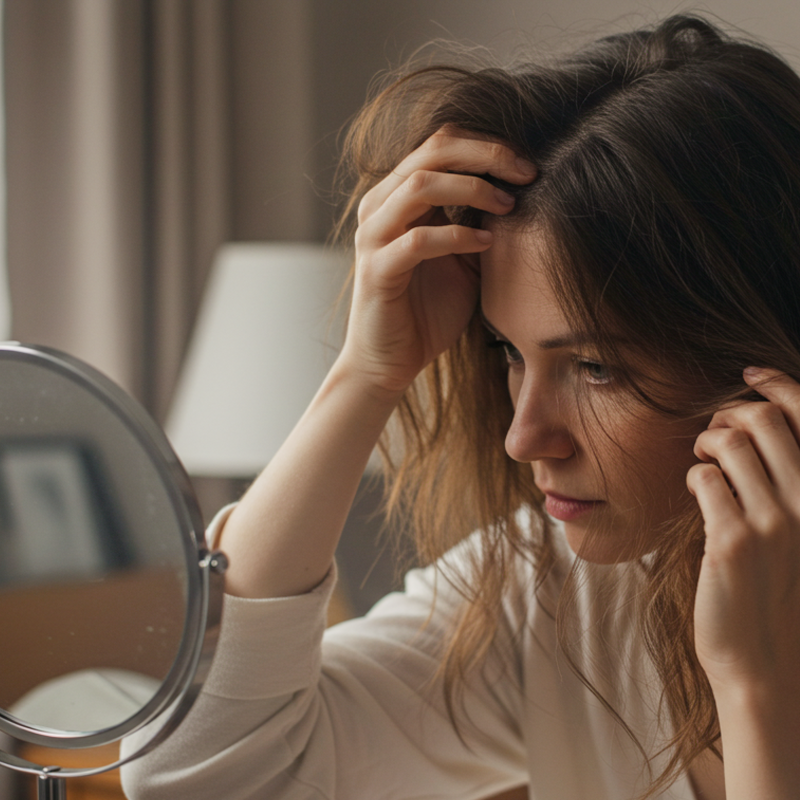
Believing in the importance of spreading health awareness in the community, we at cosmolifekw.com present this series of specialized articles on hair and scalp health.
Just as plants need fertile and healthy soil to grow strong and vibrant, your hair needs a healthy, balanced scalp to be at its best. The scalp is not just skin covering the skull; it is a complex and vital ecosystem that provides nourishment, protection, and the ideal environment for hair follicles. When this balance is disturbed, problems arise in the form of annoying dandruff, persistent itching, inflammation, and in some cases, it can contribute to hair loss.
In this article, we will delve into the most common scalp problems, explain the differences between them, and offer practical and scientific solutions to manage them.
Dandruff and Seborrheic Dermatitis: The Most Common Problem

Dandruff is one of the most common scalp complaints, but it's important to distinguish between its different types to understand its cause and treat it effectively.
Understanding the Difference Between Types of Dandruff:
Dry Dandruff: Appears as small, white, dry flakes that fall easily onto the shoulders. It is usually accompanied by a dry, tight scalp and worsens in the winter.
Oily Dandruff (Seborrheic Dermatitis): This is the more severe form. The flakes are larger, yellowish, and greasy to the touch, and tend to stick to the scalp and hair. The scalp itself is often oily, red, and inflamed. Seborrheic dermatitis can extend to other areas rich in oil glands, such as the sides of the nose, eyebrows, ears, and the center of the chest.
The Culprit Fungus: Malassezia
The main cause of seborrheic dermatitis is not poor hygiene, but an inflammatory response to the overgrowth of a yeast-like fungus called Malassezia. This fungus naturally lives on the skin of most adults without causing any problems. However, in some people, this fungus multiplies excessively, feeding on the oils (sebum) secreted by the scalp. During this process, it produces byproducts (like oleic acid) that irritate the scalp, leading to an immune response that speeds up the skin cell renewal cycle. This rapid renewal is what produces the visible flakes and associated inflammation.
Initial Diagnostic Questionnaire:
- Flake Appearance: Are your flakes white and dry, falling off easily, or are they yellow, greasy, and stuck to your scalp?
- Scalp Condition: Does your scalp feel dry and tight, or is it oily and inflamed?
- Itching: Do you experience mild itching or severe, persistent itching?
- Affected Areas: Is the problem confined to your scalp, or does it extend to your face (eyebrows, sides of the nose) or chest?
Treatment with Active Ingredients in Shampoos:
Managing dandruff and seborrheic dermatitis primarily relies on using medicated shampoos containing active ingredients that target the underlying causes. It's important to understand how each ingredient works to choose the most suitable one:
- Pyrithione Zinc: Has antifungal and antibacterial properties and helps control the growth of the Malassezia fungus.
- Selenium Sulfide: Slows down the rate of skin cell turnover and also has an antifungal effect. It may discolor light or color-treated hair.
- Ketoconazole: A broad-spectrum antifungal and is one of the most potent over-the-counter ingredients (at 1% concentration) for controlling Malassezia.
- Salicylic Acid: Acts as a chemical exfoliant that helps break down and remove built-up scales on the scalp, allowing other ingredients to better reach the skin.
- Coal Tar: Works by slowing the rapid growth of skin cells. It has a strong odor and may stain light-colored clothing, so caution is advised.
Expert Tip: For best results, leave the medicated shampoo on your scalp for at least 5 minutes before rinsing to allow the active ingredients to work. If you feel the shampoo you're using has lost its effectiveness, try alternating with another shampoo containing a different active ingredient.
Scalp Psoriasis:
Scalp psoriasis is a completely different condition from dandruff, although their symptoms may initially seem similar.
What Does Scalp Psoriasis Look Like?
Psoriasis is characterized by thick, red plaques that are raised above the skin's surface, covered with silvery-white, dry, and shiny scales. These scales are typically thicker and more adherent than those of seborrheic dermatitis. The plaques often extend slightly beyond the hairline to the forehead or the back of the neck. It can cause severe itching and sometimes a burning sensation or pain.
The Scientific Cause:
Unlike seborrheic dermatitis, which is linked to a fungus, psoriasis is a chronic autoimmune disease. In this condition, the immune system sends faulty signals that cause a massive acceleration in the life cycle of skin cells, causing them to mature and move to the surface in days instead of weeks. This rapid accumulation of cells is what forms the thick plaques and silvery scales. Psoriasis is not contagious at all.
Initial Diagnostic Questionnaire:
- Flake Appearance: Are the flakes on your scalp silvery, thick, and very dry?
- Plaques: Are there raised, well-defined red patches under the scales?
- Affected Areas: Do the patches extend beyond your hairline? Do you have similar symptoms on other parts of your body (like elbows, knees, or lower back)?
- Other Symptoms: Do you experience joint pain? (About 30% of people with psoriasis develop psoriatic arthritis).
Treatment and Management Options:
The goal of treating scalp psoriasis is to control symptoms, reduce inflammation, and slow down cell growth.
Topical Treatments:
These are the first line of treatment and include:
- Coal Tar and Salicylic Acid Shampoos: Help to remove thick scales and soothe inflammation.
- Topical Corticosteroids: Available as solutions, foams, or ointments by prescription to quickly reduce inflammation and itching.
- Vitamin D Analogs (like Calcipotriene): Help to slow down the growth of skin cells.
Advanced Treatments:
In severe cases or those that do not respond to topical treatments, a doctor may resort to phototherapy or systemic medications (oral or injectable) that work to modify the immune system's response.
Comparison Table: Seborrheic Dermatitis vs. Scalp Psoriasis

| Characteristic | Seborrheic Dermatitis | Scalp Psoriasis |
|---|---|---|
| Scales | Yellowish, greasy, adherent | Silvery, white, thick, dry |
| Skin Underneath | Red and inflamed | Red, thick, and raised (plaques) |
| Borders | Poorly defined | Well-defined and distinct |
| Affected Areas | Concentrated in oily areas (face, chest) | May extend beyond the hairline and appear anywhere on the body |
| Cause | Response to Malassezia fungus | Autoimmune disease |
Prevention and General Scalp Care
Whether you suffer from one of these conditions or want to maintain a healthy scalp, following good care habits is essential:
- Balanced Cleansing: Wash your hair regularly to remove excess oils, dead skin cells, and product buildup. The frequency depends on your scalp type, but avoid overwashing, which can strip natural oils and lead to a rebound effect.
- Focus on the Scalp: When shampooing, gently massage the scalp with your fingertips (not your nails) to stimulate circulation and clean it thoroughly. Shampoo is primarily for cleaning the scalp.
- Avoid Irritants: Minimize the use of styling products containing alcohol, which can dry out the scalp. If you're experiencing a flare-up, it's best to avoid all styling products until your scalp calms down.
- Don't Scratch: Itching and scratching, though hard to resist, worsen inflammation and can cause small wounds that open the door to bacterial infections.
When Should You See a Doctor?
Over-the-counter treatments are very effective for mild to moderate cases of dandruff. However, you should consult a dermatologist in the following situations:
- If symptoms do not improve after using medicated shampoos for several weeks.
- If the itching becomes so severe that it affects your sleep or daily activities.
- If your scalp is very painful, red, or oozing pus.
- If you suspect you have psoriasis.
- If the scalp flaking is accompanied by noticeable hair loss.
Caring for your scalp is a direct investment in the health and beauty of your hair. In the next article, we will move from treatment to prevention, providing a guide to building the ideal care routine recommended by dermatologists to keep your hair strong and protected from damage.
Important Note: The information in this article is for educational purposes only and is not a substitute for consulting a doctor or pharmacist. Accurate diagnosis and appropriate treatment always require professional medical advice.
Frequently Asked Questions about Scalp Problems in the Gulf Region
Q: Why do scalp problems like dandruff and itching increase in the summer in the Gulf region?
A: High heat and humidity create an ideal environment for the growth of fungi and bacteria, including the Malassezia fungus that causes dandruff. Excessive sweating also leads to a buildup of salt and oils on the scalp, which can cause irritation and itching. The constant transition between the hot, humid outdoor air and the cold, dry indoor air from air conditioners can disrupt the scalp's moisture balance.
Q: Does wearing a hijab increase scalp problems?
A: The hijab itself does not cause problems, but certain practices associated with it might contribute. Wearing head coverings made of non-breathable fabrics (like polyester) for long periods can trap sweat and moisture, creating a warm, damp environment that encourages fungal growth. The solution is to choose natural fabrics like cotton or linen, ensure your hair is completely dry before wearing the hijab, and give your scalp a chance to breathe at home.
Q: How can I deal with severe scalp itching during the summer?
A: First, resist the urge to scratch forcefully, as this worsens inflammation and can cause small wounds. Use a soothing shampoo with ingredients like menthol or tea tree oil for a cooling effect. You can also apply a cold compress to your scalp for 10-15 minutes for temporary relief. If the itching persists, it is essential to consult a doctor to rule out an infection or other skin condition.
Q: Can scalp problems be a sign of an internal health issue?
A: Yes, sometimes. A persistently dry and flaky scalp can be a sign of a deficiency in certain nutrients like B vitamins or zinc. Also, some health conditions such as thyroid disease or autoimmune disorders can manifest their initial symptoms on the skin, including the scalp. If your scalp problems are chronic and do not respond to usual treatments, it's wise to have a comprehensive medical check-up.
Read the next article: "Building Your Hair Care Routine: Scientific Recommendations for Maintaining Healthy and Strong Hair"
For more information and personalized advice, we invite you to visit our website cosmolifekw.com. Never hesitate to contact our customer service; our team includes beauty experts ready to assist you and answer all your questions.
Sources:
- American Academy of Dermatology (AAD)
- European Academy of Dermatology and Venereology (EADV)


